

Primary Machinery Lineup
Featured Heavy Equipment for Mumbai Infrastructure Projects
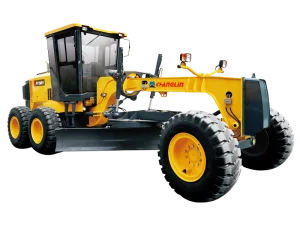
Direct factory-configured machinery designed for maximum compaction efficiency, heavy earthmoving, and continuous operation in tropical coastal environments.


Technical Procurement Report
Compaction Engineering in Mumbai: Navigating Subgrade Soil Dynamics & Municipal Waste Density
The Mumbai Metropolitan Region (MMR) represents one of the world's most intense urban infrastructure development hubs. From the coastal land reclamation projects along the Marine Drive extension to massive municipal solid waste management facilities at Kanjurmarg and Deonar, selection of compaction equipment directly dictates long-term structural integrity and operational ROI.
Standard compaction machinery often suffers premature mechanical breakdown or insufficient density achievements when subjected to Mumbai's hyper-saline coastal air, high-moisture cohesive clay subgrades, and heavy monsoon-driven soil saturation. Sourcing high-tonnage landfill compactors and heavy vibratory rollers directly from established Chinese original equipment manufacturers (OEMs) like Sinomach-HI (Changlin) provides Indian contractors and municipal procurement boards with custom engineering configurations tailored specifically for Western India's challenging geotectonic conditions.
Key Procurement Benchmarks
- Waste Shredder & Compaction Teeth: High-alloy steel cleats delivering static linear loads exceeding 450 N/cm for maximum cell density at municipal dump sites.
- Anti-Corrosion Marine Paint Systems: Multi-layer epoxy/polyurethane coatings designed to withstand high humidity and saline exposure along the Konkan coast.
- Dual Vibration Amplitude Hydraulics: Precise compaction control for both deep subbase soil layers and thin asphalt surface overlays.
- CEV Stage IV / V Compliance: Fully compliant with Indian Automotive Research Association of India (ARAI) emission standards.
Local Market Analysis
Mumbai’s Commercial & Infrastructure Landscape
Evaluating the geotechnical challenges and municipal waste demands driving equipment specifications across Maharashtra.
MMRDA Mega-Projects & Expressways
The Mumbai Metropolitan Region Development Authority (MMRDA) and MSRDC are overseeing multi-billion-dollar transportation corridors, including the Mumbai Coastal Road, Thane-Borivali Twin Tunnel, and Mumbai-Nagpur Samruddhi Mahamarg extensions. Road rollers and vibratory soil compactors used here must provide continuous, high-amplitude compaction to stabilize heavy basaltic rock fill and saturated subgrade clays prior to asphalt paving.
Municipal Solid Waste (MSW) Challenges
Mumbai generates over 11,000 metric tons of municipal solid waste daily. Solid waste facilities such as Kanjurmarg and Deonar require heavy-duty landfill compactors featuring 20+ ton operating weights, wheel scrapers, and high-impact tamping feet. Effective compaction increases landfill cell capacity by up to 45%, extends operational lifespan, reduces leachate formation, and mitigates subsurface methane gas pockets.
Port Reclamation & Industrial Zones
Expansions around Jawaharlal Nehru Port Trust (JNPT / Nhava Sheva) and industrial corridors in Navi Mumbai, Taloja, and Thane demand continuous foundation compaction. Soft marine clays require precise soil stabilization techniques using heavy vibratory padfoot rollers to prevent post-construction settlement of warehousing slabs and heavy container yards.
Geotechnical Note for Mumbai Contractors:
Due to the high plasticity index of local Black Cotton Soil and reclaimed marshlands across Thane Creek, compaction equipment must utilize optimized dual-frequency vibration settings (typically 28 Hz to 35 Hz) to achieve 98% modified Proctor density without causing shear failure in subbase layers.
Manufacturing Leadership
Why Direct Sourcing from China Factories Advantages Indian Buyers
Leveraging state-owned manufacturing scale, rigorous quality assurance, and direct maritime logistics to Mumbai ports.
State-Owned Industrial Precision
As part of Sinomach-HI (Changlin), our Changzhou production base operates advanced robotic welding cells, large-scale CNC machining centers, and automated heat-treatment furnaces. This ensures that heavy compactor frames, drum shells, and axle mounts possess superior fatigue resistance under relentless 24/7 operating schedules common on Indian job sites.
Cost Efficiency & Total Ownership Cost (TCO)
Direct factory procurement eliminates multi-tiered dealer markups, offering Mumbai buyers a 25% to 40% capital expenditure advantage over Western OEMs without sacrificing component quality. Premium global power units (Weichai, Cummins, Shangchai) combined with heavy-duty hydrostatic transmissions ensure long service life and high residual asset value.
60+
Years Manufacturing Experience
180+
Export Destination Markets
JNPT
Direct Shipping Line Access
100%
Pre-Shipment Load Tested
Deployment Scenarios
Localized Compaction Applications Across Maharashtra
Real-world equipment matching for municipal waste management, road building, and commercial site prep.
| Application Site | Geotechnical / Material Challenge | Recommended Machine Type | Key Configuration Requirement |
|---|---|---|---|
| Kanjurmarg Landfill Cell Expansion | Unsegregated wet municipal solid waste, high organic content, risk of void fires. | Heavy Landfill Compactor (GYL203 Series) | High-traction padfoot wheels with integrated wire cutters, enclosed cab with HEPA/activated carbon air filtration. |
| Mumbai Coastal Road Subbase | Reclaimed hydraulic fill, marine sand, coarse crushed basalt boulders. | Single-Drum Vibratory Road Roller (GYS20J) | Dual frequency, high dynamic centrifugal force (>380 kN), heavy-duty drum thickness (30mm+ shell). |
| Navi Mumbai Airport Logistics Park | Expansive black cotton soil layer requiring moisture barrier and high density stabilization. | Padfoot Vibratory Soil Compactor | Interchangeable padfoot shell kit, hydrostatic drive for step-less speed regulation on soft terrain. |
| Urban Road Maintenance (BMC) | Restricted urban lane widths, asphalt wearing course patching, utility trench backfill. | Tandem Oscillating Roller / Pneumatic Roller | Compact turning radius, smooth drum with pressurized water spray system, low operator noise rating. |
Future Trends
Next-Generation Compaction Innovations
How intelligent systems and electrification are transforming job-site performance and sustainability.
Continuous Compaction Control (CCC)
Modern compactors utilize accelerometer-based sensor arrays mounted on the drum shaft to measure real-time soil stiffness (Evib/CMV values). This system alerts operators via an in-cab digital display when desired compaction density is achieved, eliminating over-compaction, saving up to 20% on fuel, and preventing aggregate crushing.
Fleet Telematics & Remote Diagnostics
Every factory unit exported to India can be equipped with 4G/GPS telematics modules compatible with local Indian cellular networks. Fleet managers in Mumbai can monitor real-time engine health, fuel burn rates, location geofencing, and scheduled maintenance alerts from a unified desktop or mobile dashboard.
Electrification & Zero-Emission Drive
To support India's National Clean Air Programme (NCAP) in urban centers like Mumbai and Pune, our factory is advancing electric power platforms (EV loaders and battery-electric rollers). Electric machinery drastically reduces operating noise in residential zones while delivering instant torque and zero tailpipe emissions.
Regulatory & Logistics Security
Compliance & Seamless Import to Maharashtra
We streamline the machine importing process for Indian contractors, handling regulatory paperwork and sea freight logistics directly to Mumbai ports.
ARAI & CEV Emission Standards
Engine configurations are fully compliant with Indian Bharat Stage IV / CEV Stage IV & V off-road emission mandates, enabling hassle-free registration and site approval across all Indian states.
Direct JNPT / Nhava Sheva Sea Shipping
Machinery is packed for ocean transit using marine-grade rust preventatives and shipped via Ro-Ro (Roll-on/Roll-off) or Flat Rack containers directly to JNPT Port, minimizing ocean freight costs and transit times (typically 14-18 days sailing from East China ports).
Spare Parts Logistics & Service Training
We maintain fast-track air consignment protocols for critical replacement parts (hydraulic seals, pumps, electronic controllers) and provide structured remote or on-site technician training for local Indian maintenance teams.
Request Technical Specifications
Need detailed engineering drawings, axle weight distributions, engine power curves, or FOB/CIF JNPT price quotations?
Send Inquiry Now
Expert Sourcing Guide
Frequently Asked Questions for Mumbai Buyers
Direct answers addressing technical selection, import procedures, and operational queries from engineering procurement teams.
What type of compactor is best suited for landfill management at Kanjurmarg or Deonar?
For municipal solid waste (MSW) sites in Mumbai, dedicated four-wheel drive Landfill Compactors (such as the GYL203 series) are mandatory. Unlike standard soil rollers, landfill compactors feature heavy steel wheels equipped with high-profile tamping feet and integrated wire cutters to shred bulky waste, maximize waste density (achieving up to 1.0–1.2 t/m³), and prevent wire entanglement around planetary axles. Additionally, an enclosed operator cab equipped with positive-pressure HEPA and carbon filtration is essential to protect operators from landfill gas and odorous particulate matter.
How do China-manufactured road rollers handle Mumbai’s monsoon moisture conditions?
Compacting soil with high moisture levels during or after the Konkan monsoon requires precise amplitude and frequency customization. Our single-drum vibratory rollers (e.g., GYS20J) are built with heavy dual-frequency hydraulic vibration systems. By switching to high frequency and low amplitude, operators can effectively compact wet subgrades without drawing pore-water to the surface or liquifying the base material. All electrical wiring utilizes IP67-rated waterproof Deutsch connectors to prevent electrical shorts in humid environments.
What are the lead times for shipping a compactor from factory to JNPT Port, Mumbai?
Production lead time at our Changzhou factory generally ranges between 15 to 25 calendar days, depending on custom engine or attachment specifications. Ocean transit time from Shanghai or Ningbo port to JNPT (Nhava Sheva, Mumbai) takes approximately 14 to 18 days via direct liner services. In total, buyers should plan for a 35 to 45-day door-to-port timeline from order confirmation.
Can Sinomach-HI machinery be configured with Cummins or Weichai engines for India?
Yes. As a global manufacturer, we offer modular powertrain integration. Indian customers can select from genuine Cummins, Weichai, or Shangchai diesel engines certified for Bharat Stage IV / CEV Stage IV/V emissions. Selecting globally established engine platforms ensures that routine maintenance filters, injectors, and spare parts are readily available off-the-shelf throughout Maharashtra.
What warranty coverage and spare parts support is provided for international buyers?
All factory-direct machines are backed by a standard 12-month or 2,000-operating-hour warranty (whichever occurs first), covering major structural and hydraulic components. We supply fast-wearing spare parts packages alongside machine shipments and operate a dedicated 24/7 technical response center for international remote diagnostics. Replacement parts can be dispatched via express air freight directly to Mumbai within 3 to 5 business days.
How does buying directly from the Changzhou factory lower fleet procurement costs?
By bypassing third-party trading intermediaries and regional distribution markups, direct factory purchasing saves Indian fleet owners up to 30% on initial equipment Capex. Furthermore, factory-direct buyers can customize machine options—such as requesting specialized padfoot shells, custom bucket attachments, or high-capacity air conditioning systems—at baseline manufacturing costs before shipping.
Full Construction Fleet Catalog
Explore Earthmoving, Grading & Compaction Fleet Range
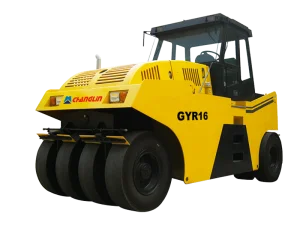
Heavy excavators, electric loaders, motor graders, bulldozers, and vibratory rollers built for global infrastructure performance.






Start Your Procurement Process
Ready to Source Direct-Factory Compactors for Mumbai Projects?
Get customized engineering quotations, ARAI compliance documentation, and direct sea-freight schedules to JNPT Port. Speak directly with our heavy machinery export engineers.