
Featured Landfill Compactors & Fleet Machinery for Germany

China Landfill Compactor GYL203 Manufacturer, Factories
View Model Details
Buy Landfill Compactor GYL233 Manufacturers, Factory
View Model Details
China Crawler Excavator ZG220N Manufacturers, Factories
View Model Details
Buy Road Roller GYS08J Manufacturer, Factories
View Model DetailsGerman Waste Policy, KrWG Strictures & Compaction Demands
Germany stands at the absolute pinnacle of circular economy implementation and municipal solid waste (MSW) management within the European Union. Guided by the stringent framework of the Circular Economy Act (Kreislaufwirtschaftsgesetz - KrWG) and the Landfill Ordinance (Deponieverordnung - DepV), untreated municipal waste has been banned from German landfills since June 2005. Today, German waste management infrastructure relies heavily on Mechanical-Biological Treatment (MBT / Mechanisch-Biologische Abfallbehandlungsanlagen) plants, thermal waste-to-energy recovery facilities, and high-security industrial depots (Deponieklasse I, II, and III).
Despite aggressive recycling mandates, significant volumes of non-recyclable industrial slag, construction debris residues, incinerator bottom ash (IBA), and MBT output require structured containment. Managing these residual waste repositories demands maximum density compaction to optimize valuable landfill site capacity, eliminate structural air pockets, control fugitive methane gas emissions, and prevent toxic leachate pooling.
KrWG Compliance
Meeting DepV Deponieklasse I-III stability standards requiring uniform compaction density surpassing 1.2 to 1.4 t/m³ for residual waste stability.
High-Slope Traction
German landfill topography frequently features steep cell slopes (up to 30° gradients), requiring high-torque hydrostatic drive systems and wide blade coverage.
Air Quality & Bio-Safety
Operator protection in bio-aerosol rich environments via pressurized cabs, HEPA carbon filtration, and EU Stage V ultra-low emission powertrains.
Technical Architecture & Heavy Compactor Engineering Roadmap
1. Advanced Wheel Geometry and Tooth Design
The primary mechanism of a specialized landfill compactor lies in its ability to shred, mix, and compress heterogeneous waste material simultaneously. Premium compactors utilize high-alloy steel tamping wheels equipped with specialized wear-resistant cleats (polygon spikes or diamond-pattern teeth). Unlike conventional smooth-drum rollers, these teeth generate high specific ground pressure (exceeding 280 kPa), tearing through bulky items, breaking down plastic hollows, and driving maximum settlement per pass.
2. Hydrostatic vs. Power-Shift Drivetrain Efficiency
Heavy compaction in municipal waste repositories demands uninterrupted power transmission. Modern engineering solutions favor four-wheel independent hydrostatic drives or heavy-duty power-shift transmissions equipped with torque converters and inter-axle differential locks. This configuration prevents wheel spin on wet, loose municipal waste surfaces and ensures maximum traction when climbing steep landfill embankments.
| Technical Parameter | Standard Construction Roller | Heavy Landfill Compactor (GYL Series) | Procurement Benefit for German Operators |
|---|---|---|---|
| Operating Weight Range | 10 - 16 Tonnes | 20 - 35 Tonnes | Achieves required 1.3+ t/m³ target compaction in 40% fewer passes. |
| Wheel Tooth Configuration | Smooth / Padfoot Drum | High-Wear Alloy Cleats & Scraper Bars | Prevents material wrapping (wire/plastics) and maximizes shredding effect. |
| Engine Filtration System | Single-Stage Standard Filter | Dual-Stage Cyclone Pre-Cleaner + Reversible Fan | Protects engine from airborne dust, fluff, and bio-debris clogging. |
| Cabin Safety (ISO 3449/3471) | Standard ROPS | Pressurized ROPS/FOPS + Carbon HEPA Filter | Meets strict German BG BAU safety guidelines for hazardous aerosol protection. |
China Factory Supply Chain Resilience vs. European OEM Sourcing
German municipal waste contractors and private recycling conglomerates (such as Remondis, Veolia Deutschland, and ALBA Group) face rising operational costs, tight tender margins, and prolonged lead times when procuring machinery from traditional European original equipment manufacturers (OEMs). Direct procurement from leading Chinese state-owned heavy machinery platforms—such as Sinomach-HI (Changlin)—presents a transformative procurement strategy.
1. Unmatched Capital Expenditure (CAPEX) Efficiency
Procuring heavy landfill compactors directly from audited Chinese manufacturing hubs offers a 30% to 45% CAPEX reduction compared to legacy European brands, without sacrificing structural integrity or core component reliability. By integrating globally recognized key components—such as Cummins Stage V diesel engines, Rexroth hydrostatic systems, and ZF gearboxes—Chinese manufacturing combines global technical standards with cost-efficient structural steel fabrication and assembly.
2. Robust Component Sourcing and Lead-Time Assurance
While European factory order backlogs can delay machine deliveries by 8 to 12 months, Chinese industrial ecosystems maintain fully integrated, resilient supply chains. High-volume manufacturing lines in Changzhou, Jiangsu ensure standard compactor units are manufactured, factory-tested, and ready for maritime shipping within 30 to 45 days.
Streamline Your German Landfill Machinery Procurement
Get direct factory pricing, full technical data sheets, and custom CE-compliant options for your waste management project.
Send Inquiry NowLocalized Application Scenarios across German Municipalities
Bavaria & Baden-Württemberg
Scenario: Municipal waste processing and MBT residue compaction in mountainous terrains.
Solution: Heavyweight GYL233 compactors configured with high-grade slope stabilization features, differential locks, and wide dozer blades for rapid material spreading across terraced cells.
North Rhine-Westphalia (NRW)
Scenario: High-volume industrial ash, slag, and construction material compaction at Deponieklasse III sites.
Solution: Wear-strengthened tamping wheel teeth engineered specifically for abrasive industrial aggregates, coupled with reinforced undercarriage belly plates to protect against sharp debris.
Northern & Eastern Germany
Scenario: Historic landfill cell expansion and capping projects near coastal and wetland zones.
Solution: Dual-purpose compaction fleets integrating heavy GYL landfill compactors with ZG series crawler excavators for clay liner placement and sub-base stabilization.
Compliance, CE Certification & After-Sales Assurance
Importing heavy earthmoving and compaction machinery into Germany requires rigorous adherence to European Union health, safety, and environmental standards. Sinomach-HI machinery exported to European markets complies with all mandatory legal directives:
- CE Marking & Machinery Directive 2006/42/EC: Comprehensive mechanical safety verification across all operational systems.
- Noise Emission Directive 2000/14/EC: Sound-attenuated engine compartments and low-noise cooling fans ensuring compliance near urban zones.
- EU Stage V Exhaust Emissions: Advanced Selective Catalytic Reduction (SCR) and Diesel Particulate Filter (DPF) integration for zero-penalty operation across low-emission zones.
- Spare Parts & Field Diagnostics: Global parts dispatch networks supported by standardized diagnostic protocols, ensuring consumable replacement parts (cleats, scraper bars, filters) reach European job sites rapidly.
Comprehensive Earthmoving & Heavy Construction Machinery
Explore our full range of heavy excavators, motor graders, dozers, and specialized compactors available for German direct factory procurement.
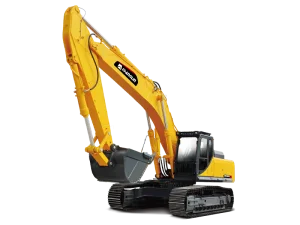
China Crawler Excavator ZG480 Manufacturers, Factory
View Product Details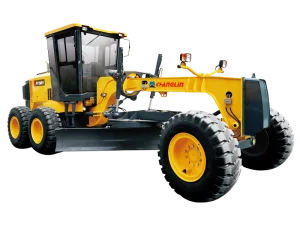
Buy Motor Grader PY150 Factory, Factories
View Product Details
Buy Bulldozer YD320 Manufacturer, Factory
View Product Details
China Landfill Compactor GYL203 Manufacturer, Factories
View Product Details
Buy Motor Grader PY220H-5 Manufacturers, Factories
View Product Details
Buy Skid Steer Loader 255F Manufacturers, Factories
View Product Details
China Crawler Excavator ZG385 Factory, Factories
View Product Details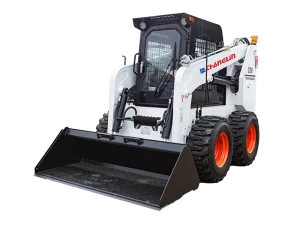
China Skid Steer Loader 275F Manufacturer, Factories
View Product DetailsFrequently Asked Questions by German Procurement Managers
Ready to Upgrade Your German Landfill Fleet?
Consult with our senior heavy compaction engineering specialists. Request detailed technical specifications, custom engine options, and direct manufacturer pricing today.
Send Inquiry Now