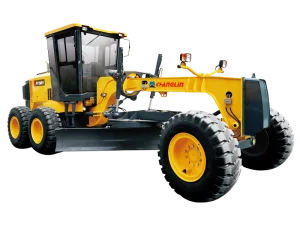
Heavy-Duty Landfill & Earthmoving Equipment for Algeria
Engineered for high compaction density, rugged durability, and peak efficiency across North African landfill & infrastructure sites.




1. Algeria Municipal Solid Waste (MSW) & Industrial CET Infrastructure Landscape
The Democratic and Popular Republic of Algeria is undergoing an unprecedented modernization of its environmental protection frameworks and municipal waste processing systems. Generating upwards of 13.5 million metric tons of Municipal Solid Waste (MSW) annually—with urban centers such as Algiers, Oran, Constantine, and Annaba expanding at exponential rates—the Algerian Ministry of Environment and Renewable Energies, in coordination with the National Waste Agency (Agence Nationale des Déchets - AND), has enacted rigorous regulatory paradigms under Law No. 01-19 regarding waste management and control.
Historically reliant on unmanaged open landfills, the country has made structural pivots toward establishing standardized Controlled Engineered Landfills (Centres d’Enfouissement Technique - CET). Operating a CET in Algeria poses severe engineering and operational challenges due to unique geographic, climatic, and volumetric pressures:
Extreme Thermal Loads
Southern and inland Wilayas (e.g., Adrar, Ouargla, Tamanrasset) experience ambient summer temperatures exceeding 48°C, demanding heavy machinery with high-capacity cooling packages and thermal insulation.
High Waste Moisture & Organics
Algerian municipal waste streams contain over 55-65% organic biodegradable fraction, resulting in high moisture content, aggressive leachate generation, and accelerated void formation within landfill cells.
Rigid Landfill Lifespan Goals
To maximize cell air-space utilization, Algerian public works authorities require minimal in-situ waste compaction densities of 0.9 to 1.15 tonnes/m³, achievable only via specialized, high-load landfill compactors.
Standard earthmoving machinery—such as modified wheel loaders or tracked bulldozers—fails to deliver the requisite compaction force, crushing power, or traction needed for modern CET operations. Bulldozer tracks bridge over bulky waste without crushing hollow items (appliances, plastics, drums), leaving micro-voids that lead to spontaneous internal landfill fires and rapid air-space depletion. Consequently, Algerian municipal authorities and private concessionaires are prioritizing direct procurement of heavy-duty, purpose-built 4-wheel drive landfill compactors equipped with high-impact tamping feet and integrated refuse blades.
2. Technical Architecture & Engineering Standards for Landfill Compactors
Cleated Steel Wheel Metallurgy & Geometry
The core efficacy of models such as the GYL203 (20-Ton) and GYL233 (23-Ton) lies in their high-tensile steel wheels fitted with abrasion-resistant tamping teeth. Engineered with specialized alloy compositions (high-manganese heat-treated steel), these teeth exert concentrated point-loads exceeding 300 kPa. This localized pressure shears, shatters, and homogenizes heterogeneous municipal refuse, driving out air pockets and compacting material into tight, non-combustible layers.
Hydrostatic Drive Systems & Traction Control
Navigating loose, sloped waste faces requires constant power distribution without wheel slip. Advanced compactors manufactured for the Algerian market utilize dual-circuit hydrostatic transmission systems featuring independent hydraulic wheel motors, heavy-duty planetary final drives, and automatic inter-axle differential lockouts. This guarantees 100% gradeability on steep 30° landfill working faces even under muddy, leachate-soaked conditions.
Engineering Advantage: Sinomach-HI landfill compactors incorporate full-width heavy-duty scraper bars with replaceable wear tips positioned at the front and rear of each drum. This design prevents cohesive wet soil, plastic film, and wire wrap from clogging the tamping teeth, preserving continuous high-impact contact and preventing parasitic horsepower loss.
Key Mechanical & Operational Specifications Comparison
When selecting a landfill compactor for Algerian municipal tenders or private concession contracts, procurement engineers must evaluate structural weight distribution, engine torque curves, and air filtration integrity:
- Heavy Rigid Articulated Chassis: High oscillation angle (±10° to ±12°) and articulation joint (±35° to ±40°) ensure all four steel drums maintain continuous contact with uneven refuse surfaces, maximizing static linear load distribution.
- Pressurized FOPS/ROPS Ergonomic Cabins: Landfill environments produce hazardous bio-aerosols, hydrogen sulfide ($H_2S$), methane ($CH_4$), and fine dust. Cabs feature multi-stage positive pressure air conditioning fitted with activated carbon and HEPA micro-particle filtration.
- Underbody Armor & Component Protection: Completely enclosed belly pans, heavy-duty drive shaft guards, and sealed hydraulic lines shield vital powertrain components against wire entanglement, punctures, and thermal heat spikes.
3. Why Sourcing from China’s Top OEMs Delivers Superior Strategic Value for Algeria
Global procurement teams operating within North Africa face an evolving balance between capital expenditure (CAPEX), total cost of ownership (TCO), and after-sales support responsiveness. Historically, European OEMs dominated Algerian municipal machinery contracts. However, the global construction and environmental machinery landscape has shifted fundamentally toward premier Chinese state-owned and enterprise manufacturers (such as Sinomach-HI / Changlin).
Capital Efficiency (35-45% CAPEX Advantage)
Chinese direct-factory manufacturing leverages streamlined supply chains and state-of-the-art robotic assembly, allowing Algerian operators to acquire two high-performance heavy compactors for the price of a single European unit, drastically accelerating fleet expansion.
Standardized Component Reliability
Equipped with internationally recognized, field-proven heavy engines (e.g., Weichai/Cummins Tier 2 / Stage III low-sulfur diesel compatible engines) and Danfoss/Rexroth hydraulic systems, guaranteeing high reliability under harsh Algerian fuels and operating conditions.
Dedicated North Africa Logistics Hubs
Direct maritime shipping routes directly connecting major Chinese ports (Shanghai, Ningbo, Qingdao) to Algerian maritime hubs (Port of Algiers, Oran, Skikda, Bejaia), paired with rapid wear-part spare dispatch through established regional distributor networks.
4. Localized Operating Scenarios Across Algerian Wilayas
Scenario A: High-Tonnage Urban CETs
Locations: Algiers (Hamici / Corso), Oran (Hassi Bounif), Constantine.
Operational Demand: Multi-shift 16-24 hour daily operations dealing with heavy domestic organic waste streams.
Machinery Profile: 23-Ton Class Compactors (GYL233) working alongside 5-Ton Wheel Loaders (ZL50EV) and Crawler Excavators (ZG385) for rapid spreading, sorting, and cell cover earthmoving.
Scenario B: Coastal High-Humidity Landfills
Locations: Annaba, Skikda, Jijel, Mostaganem.
Operational Demand: Saline air environments combined with high-moisture organic refuse leading to accelerated metal oxidation and leachate mud.
Machinery Profile: Compactors with multi-coat epoxy anti-corrosion chassis treatments, IP67-rated sealed electrical harnesses, and high-clearance frame designs.
Scenario C: Saharan Arid Municipalities
Locations: Ghardaïa, Ouargla, Hassi Messaoud, Béchar.
Operational Demand: Extreme fine sand intrusion, ambient temperatures reaching 50°C, and isolated maintenance logistics.
Machinery Profile: Tropicalized cooling radiators, dual cyclone pre-cleaner air intake systems, and heavy-duty dust-sealed axle bearings.
5. Industry Trends: Smart Fleet Telematics & Zero-Emission Support Machinery
The municipal waste sector in Algeria is rapidly evolving from basic waste burial toward intelligent, data-driven landfill management. As Algerian municipal authorities implement stricter environmental auditing, equipment integration is pivoting around two key technological vector shifts:
Intelligent Compaction Systems (ICS) & Telematics
Modern compactors are now integrated with real-time GPS density mapping sensors, accelerometer-based compaction meters, and satellite telematics modules. Operators inside the cab receive visual heatmaps indicating real-time soil/refuse stiffness. This prevents over-compaction, saves up to 22% in fuel consumption, and eliminates uncompacted weak spots within landfill cells.
Electrification of Municipal Support Fleets
While primary compaction on heavy cells relies on high-torque diesel engines, supporting transfer stations and cover-soil loading are transitioning to 100% Electric Wheel Loaders (e.g., ZL50EV). Battery-electric earthmovers eliminate localized carbon emissions, lower noise pollution near urban residential fringes, and cut energy operating costs by up to 60% compared to traditional diesel loading equipment.
Municipal Earthmoving, Road Building & Compaction Machinery Matrix
Explore our full lineup of OEM heavy equipment customized for Algerian tenders, CET cell construction, access road maintenance, and urban municipal support.