
Primary Waste Management & Heavy Equipment Fleet
Heavy machinery manufactured to withstand rigorous landfill compaction duty cycles and demanding site topography in New Zealand.

New Zealand Spec GYL203 Landfill Compactor
View Product Specs
GYL233 High-Density Landfill Compactor
View Product Specs
ZG210D Hydraulic Earthmoving Crawler Excavator
View Product Specs
PY130H Heavy Duty Haul-Road Motor Grader
View Product SpecsNew Zealand Waste Infrastructure & Landfill Market Landscape
An in-depth operational report on how changing environmental regulations, rising disposal levies, and strict soil stability demands affect heavy equipment procurement across North and South Island landfills.
Aotearoa New Zealand's waste management ecosystem is currently undergoing its most transformative period in decades. Driven by the Ministry for the Environment’s national Waste Minimisation Act 2008 guidelines, the progressive increase of the national Waste Disposal Levy, and stringent targets within the Climate Change Response (Zero Carbon) Amendment Act, waste facility operators are under immense pressure to maximize airspace efficiency, reduce fugitive methane emissions, and enforce rigorous site compaction protocols.
Modern sanitary landfills—ranging from major regional facilities such as Redvale Landfill in Auckland, Hampton Downs in the Waikato, and Kate Valley Landfill in Canterbury, to regional council transfer stations in Southland and Hawke's Bay—require heavy compaction machinery capable of achieving in-situ waste densities exceeding 1.0 to 1.2 tonnes per cubic meter. Achieving these metrics is essential to prolonging landfill cell lifespans and preventing environmental leaching in high-rainfall zones.
Key Operational Drivers in New Zealand Landfill Engineering:
- High Precipitation & Slope Stability: New Zealand's maritime climate brings heavy regional rainfall. Compactors must thoroughly crush and seal refuse layers (typically 300–500mm lifts) to minimize water infiltration and leachate generation on sloped cell faces.
- Seismic Resilience Standards: Landfill cells must be compacted to strict engineering shear strengths to survive seismic movements, avoiding internal slope slumping.
- WorkSafe New Zealand & Health Regulations: Operators demand FOPS/ROPS certified cabins equipped with positive-pressure HEPA air filtration systems to isolate operators from toxic hydrogen sulfide (H2S), VOCs, and bio-aerosols.
- Carbon Emission Tax (NZ ETS): Reducing fuel usage per compacted ton directly cuts operating carbon taxes under the New Zealand Emissions Trading Scheme.
Heavy-Duty Landfill Compactor Manufacturing Excellence
Engineered specifically for non-homogenous waste materials, our landfill compactors combine rugged structural integrity, hydrostatic direct-drive systems, and advanced cleat designs.
High-Crush Steel Wheel Cleats
Features abrasion-resistant alloy steel wheels fitted with alternating diamond and paddle-type cleats. Delivers maximum shredding, puncturing, and material density while eliminating refuse wrapping on axles.
Central Articulated Oscillating Chassis
Heavy-duty central articulation frame allows ±15° oscillation, ensuring all four steel compaction drums maintain full ground traction and uniform weight distribution even on rough, uneven terrain.
Sealed Underbody & Guarding
Fully enclosed steel belly plates, wire cutters, and axle strippers protect the engine bay, hydraulic lines, and drive components against wire entanglements and debris accumulation.
| Spec Parameter | GYL203 Model Spec | GYL233 Model Spec | Operational Benefit in NZ |
|---|---|---|---|
| Operating Weight | 20,000 kg (20 Tonne) | 23,000 kg (23 Tonne) | Optimized static line load for medium to large daily refuse tonnages. |
| Engine Power Output | 162 kW @ 2200 rpm | 175 kW @ 2200 rpm | Low-RPM high-torque diesel performance cuts fuel burn during pushing cycles. |
| Compaction Width | 2,800 mm | 3,100 mm | Wider pass coverage minimizes operator shift hours and site fuel expenditure. |
| Blade Capacity | 4.2 m³ semi-U dozer blade | 5.5 m³ high-capacity trash blade | Efficient spreading of bulky municipal solid waste and daily cover soil. |
| Emission Compliance | Stage III / Tier 3 or Tier 4F option | Stage III / Tier 4F / Stage V optional | Meets municipal Council environmental compliance and clean air policies. |
Macro-Level Solutions & Airspace Financial Monetization
How investing in purpose-built landfill compactors significantly lowers Total Cost of Ownership (TCO) and generates millions in saved landfill airspace value.
For New Zealand landfill asset owners, airspace is a finite, highly valuable revenue-generating asset. Every cubic meter of void space consumed prematurely represents lost tipping-fee revenue and accelerates the capital expenditure required to design, consent, and build the next landfill cell under the Resource Management Act (RMA) or the new Natural and Built Environment frameworks.
Airspace Saving Formula & Economic Modeling
Consider a regional landfill receiving 100,000 tonnes of municipal waste per annum:
Standard Earthmoving Machinery (Bulldozer / Excavator Compaction)
Average Achieved Density: 0.70 t/m³
Airspace Consumed Annually: 142,857 m³
Cell Lifespan (1 Million m³ Cell): 7.0 Years
Purpose-Built GYL Series Landfill Compactor
Average Achieved Density: 1.10 t/m³
Airspace Consumed Annually: 90,909 m³
Cell Lifespan (1 Million m³ Cell): 11.0 Years (+4.0 Years)
Technical Innovation Roadmap (2025 – 2030)
Leading the transition toward intelligent, low-carbon, and telematics-connected landfill operations in New Zealand and global export markets.
GPS 3D Compaction Mapping
Integration of real-time RTK-GPS positioning systems that map compaction pass counts and track refuse height changes down to the centimeter.
Intelligent Density Sensing
Wheel-load sensors and accelerometer algorithms detect substrate resistance, signaling operators when maximum compaction density is reached.
Hybrid-Electric Powertrains
Introducing diesel-electric drive technology to slash site fuel consumption by 25%, drastically lowering localized exhaust noise and emissions.
Autonomous Site Operations
Fully autonomous compaction capability using LiDAR and radar obstacle detection, allowing remote management of hazardous waste faces.
WorkSafe NZ Standards & Factory Support Assurance
Direct factory supply combined with rigorous structural safety, operator ergonomics, and fast direct parts logistics to Ports of Auckland, Tauranga, and Lyttelton.
Operating heavy machinery on steep landfill working faces presents unique health and safety challenges. All machinery supplied into New Zealand by Sinomach-HI undergoes factory-level safety adaptation to fully comply with WorkSafe New Zealand regulations and relevant AS/NZS machinery safety guidelines.
Safety & Structural Compliance
- ROPS/FOPS Structure: Heavy-duty roll-over and falling-object protective structures certified under ISO 3471 and ISO 3449.
- Emergency Suppression: Built-in engine compartment fire suppression system readiness and dual battery isolator switches.
- Operator Health: Pressurized cab climate systems equipped with multi-stage HEPA filters to protect operators against airborne dust and H2S gases.
Parts Logistics & Factory Service
- Direct Port Shipping: Direct shipping routes from Changzhou manufacturing hub to Auckland, Tauranga, and Lyttelton (Christchurch).
- Spare Parts Kits: Pre-packaged 1,000-hour and 2,000-hour filter, seal, and wear-cleat maintenance packages included with machine delivery.
- Remote Diagnostics: Satellite/4G telemetry providing real-time engine health data and preventive maintenance warnings directly to your fleet management desk.
Frequently Asked Questions for NZ Fleet Managers
Get authoritative answers regarding machine selection, maintenance cycles, environmental standards, and shipping lead times.
How does a landfill compactor differ from a standard heavy road roller or bulldozer?
Standard road rollers rely on smooth or padfoot vibration to compact uniform soil layers, while bulldozers use rubber tracks that distribute machine weight, yielding low ground contact pressure. Landfill compactors use high-mass steel wheels studded with specialized alloy cleats. These cleats apply concentrated point pressure (exceeding 300-400 kPa) to puncture, tear, crush, and homogenize bulky municipal waste while delivering maximum static line load.
What is the recommended compaction pass protocol to achieve maximum target density?
In typical municipal solid waste (MSW) cell management, refuse should be spread in uniform lifts between 300mm and 500mm thick on a 3:1 to 4:1 slope. Best-practice operational engineering indicates that 3 to 5 passes over the same strip achieve approximately 90–95% of maximum attainable density. Additional passes beyond 6 yield diminishing returns and increase fuel consumption needlessly.
Are engine configurations compliant with New Zealand regional environmental standards?
Yes. We supply engines configured with electronic fuel injection, turbocharged intercooling, and advanced exhaust treatment options matching Stage III/Tier 3, Tier 4 Final, or Stage V standards. This ensures compliance with local regional council emissions standards while ensuring compatibility with New Zealand ultra-low sulfur diesel fuel.
How does the machine prevent wire, cable, and plastic wrapping on axles and drive components?
All our GYL series compactors are engineered with integrated steel wire cutters and heavy-duty axle strippers mounted directly adjacent to the inner and outer wheel faces. As the wheels rotate, the stationary teeth continuously shear wire, mattresses, rebar, and plastic films, preventing material buildup and seal damage.
What is the typical shipping lead time and sea freight arrangement to New Zealand?
Production and factory testing take approximately 30 to 45 days. Transit time via RoRo (Roll-on/Roll-off) or flat-rack container vessel from Eastern China ports to major NZ ports (Auckland, Tauranga, Lyttelton) takes approximately 18 to 25 days, allowing total doorstep or port-side delivery within 60 to 75 days.
What factory warranty and technical field service support are provided?
We provide a standard 12-month or 2,000-operating-hour comprehensive factory warranty (whichever comes first), covering structural, powertrain, and hydraulic assemblies. Extended warranty packages up to 36 months are available, supported by fast-track air-freight spare parts and remote engineer diagnostic dispatch.
Additional Earthmoving & Road Equipment for NZ Infrastructure
Explore our full line of crawler excavators, motor graders, road rollers, and wheel loaders available for municipal and commercial fleet procurement.

ZG365 Heavy Crawler Mining & Quarries Excavator
View Product Specs
ZG330D Mass Earthmoving Crawler Excavator
View Product Specs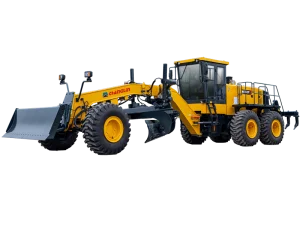
PY350T Heavy-Duty Haul Road Motor Grader
View Product Specs
GYS142 Heavy Vibratory Single Drum Road Roller
View Product Specs
PY180H Precision Road Formation Motor Grader
View Product Specs
GYS08J Compact Earthwork Vibratory Road Roller
View Product Specs
ZL50Z High-Capacity Heavy Duty Wheel Loader
View Product Specs
ZG210 Medium Hydraulic Earthmoving Excavator
View Product SpecsRequest Technical Specifications & Factory Direct Pricing
Connect directly with our senior application engineers to customize landfill compactor specifications, arrange WorkSafe compliance documentation, or schedule a virtual factory inspection.
Send Inquiry Now