
Featured Fleet Heavy Equipment Spotlight
Top-tier compact wheel skid steers and heavy earthmoving solutions engineered for maximum operational uptime across Osaka port facilities and global job sites.

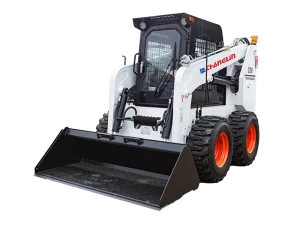


1. Osaka's Industrial Landscape & Compact Equipment Demand Dynamics
Osaka, as the economic engine of Japan's Kansai region, represents a unique convergence of dense urban infrastructure, high-capacity maritime logistics, and precision manufacturing ecosystems. The demand for wheel skid steer loaders in Osaka is driven by severe spatial constraints, stringent noise and emissions regulations, and the continuous renewal of municipal infrastructure. Unlike expansive open-pit mining environments, Osaka’s job sites—ranging from the cramped alleyways of Namba to the massive logistics terminals around Osaka Bay and Yumeshima—require machinery that maximizes hydraulic power output within a minimal physical footprint.
Local contractors and international procurement heads operating in Western Japan face escalating labor shortages alongside aggressive project timelines leading up to major municipal redevelopments. Consequently, the reliance on high-efficiency, multi-attachment compact wheel skid steers has surged. Equipment deployed in this region must adhere to Japan's Ministry of Land, Infrastructure, Transport and Tourism (MLIT) non-road gas emission standards while providing zero-radius turning capabilities essential for navigating confined civil engineering sites.
Urban Redevelopment Pressure
Dense residential and commercial zones in Osaka require compact machinery capable of executing precision demolition, material handling, and site grading without disrupting surrounding transit lines.
Port & Maritime Logistics Synergy
Facilities around the Port of Osaka utilize wheel skid steers equipped with specialized sweepers, grapples, and high-flow hydraulics for rapid bulk material cleanup inside cargo holds and container yards.
Environmental Compliance
Strict local acoustic barrier requirements and ultra-low emission mandates necessitate modern diesel tiering or electric powertrain integration across all compact fleets.
2. Technical Architecture & Engineering Standards for Osaka Operations
Evaluating wheel skid steer manufacturers active in Osaka requires a thorough examination of structural engineering, hydraulic auxiliary flow capabilities, and kinematics. Modern skid steer loaders operate on a fixed-chassis system where steering is accomplished through differential speed across independent left and right wheel pairs. In tight urban construction, mechanical longevity depends heavily on frame rigidity, chain-drive tension stability, and thermal management of hydrostatic systems.
| Performance Parameter | Standard Radial Lift Configuration | Advanced Vertical Lift Configuration | Osaka Market Impact |
|---|---|---|---|
| Primary Application | Ground-level excavation, grading, backfilling | High-reach truck loading, palleted material placement | Vertical lift leads in urban utility work & logistics loading |
| Reach at Maximum Height | Mid-range reach arc (Mid-height optimization) | Extended forward reach at maximum pin height | Essential for filling high-side dump trucks in tight streets |
| Auxiliary Hydraulic Flow | Standard Flow: 18–22 GPM (68–83 L/min) | High-Flow Option: 30–40 GPM (113–151 L/min) | High-flow required for cold planers and trenchers |
| Operating Capacity Range | 650 kg to 950 kg (1,430 to 2,090 lbs) | 1,000 kg to 1,600 kg (2,200 to 3,520 lbs) | Heavy payload density reduces total haul cycles |
| Chassis Wheelbase Impact | Shorter wheelbase; maximum maneuverability | Slightly extended wheelbase; optimized stability | Optimizes operator balance on uneven asphalt surfaces |
Engineering excellence in this segment hinges on the integration of premium hydraulic pumps (such as Rexroth or Danfoss systems) and heavy-duty planetary final drives. When operating on high-friction concrete surfaces common in Japanese industrial sites, tire wear and drivetrain strain increase exponentially. Superior manufacturers mitigate these stresses through drop-forged axles, sealed anti-friction chain cases, and automatic chain tensioning modules.
3. China Industry 4.0: Manufacturing Synergy & Supply Chain Efficiency
While Osaka maintains strong regional engineering capabilities, global procurement teams and regional Japanese fleet owners increasingly leverage direct partnerships with Tier-1 Chinese heavy machinery manufacturing bases, such as Sinomach-HI (Changlin). Driven by Industry 4.0 manufacturing transformations, leading Chinese factories provide unparalleled production scale, rapid customization, and cost-to-performance advantages that complement Japanese operational standards.
Robotic Precision Welding
Automated robotic welding cells execute continuous, high-penetration seam welds across loader arms and mainframes, eliminating structural fatigue points and delivering structural durability for high-cycle operations.
Integrated Component Sourcing
By combining globally recognized engine platforms (such as Yanmar, Cummins, or Kubota) with vertically integrated chassis and hydraulic manufacturing, China’s smart factories optimize total manufacturing costs by 25% to 40%.
Rapid Logistics to Osaka Bay
Direct maritime shipping corridors between Eastern Chinese ports (Shanghai/Ningbo) and Osaka Port allow complete skid steer units and genuine service parts to reach Japanese job sites with reduced lead times.
Supply chain resilience is maintained through rigorous Quality Assurance (QA) protocols, including 100% full-load hydraulic pressure testing, digital coordinate measurement of boom geometries, and climate-controlled paint curing. Procurement directors sourcing equipment for Western Japan benefit from custom OEM configurations tailored specifically to local hydraulic attachment interfaces, quick-coupler dimensions, and electrical harness standards.
4. Global Procurement Dynamics & Total Cost of Ownership (TCO)
For fleet managers, rental asset buyers, and general contractors evaluating machinery options in Osaka, upfront capital expenditure (CapEx) represents only a fraction of total life-cycle costs. A comprehensive Total Cost of Ownership (TCO) calculation must factor in fuel consumption per hour, routine maintenance intervals, spare parts price stability, and resale values at the end of primary service cycles.
Capital Expenditure (CapEx) Optimization
Direct factory procurement significantly lowers initial acquisition costs. This enables contractors to expand fleet sizes or divert capital toward high-performance attachments (e.g., hydraulic breakers, cold planers, augers) without exceeding overall fleet budgets.
Operational Expenditure (OpEx) Efficiency
Engine torque curve matching and load-sensing hydraulic systems minimize idle fuel burn. High-efficiency cooling packages prevent hydraulic oil breakdown during continuous summer operations in Kansai's humid climate.
Preventive Maintenance & Uptime Guarantee
Standardizing filters, hydraulic hoses, and electrical relays across skid steer fleets streamlines maintenance schedules. Access to accessible diagnostic ports speeds up field servicing by technicians.
5. Localized Worksite Application Scenarios Across Osaka
The practical versatility of wheel skid steer loaders is best demonstrated through real-world job site applications across Osaka Prefecture and the broader Kansai economic corridor. From heavy-duty civil engineering to specialized industrial material handling, these machines adapt rapidly via universal quick-attach systems.
Urban Street Resurfacing & Milling
During night shifts in Osaka's dense commercial districts, compact skid steers fitted with cold planer attachments remove damaged asphalt layers adjacent to curbs. High hydraulic flow maintains constant drum torque without stalling the diesel engine.
Osaka Bay Warehousing & Bulk Handling
Inside maritime transit sheds and fertilizer storage sites, wheel skid steers equipped with high-capacity light-material buckets rapidly aggregate cargo. Compact physical dimensions allow operations inside standard shipping containers and dry bulk holds.
Foundation Trenching & Utility Installation
In suburban housing developments across Sakai and Higashiosaka, wheel skid steers equipped with hydraulic trenchers cut precise utility channels for power, water, and fiber-optic conduits, minimizing ground disturbance compared to larger excavators.
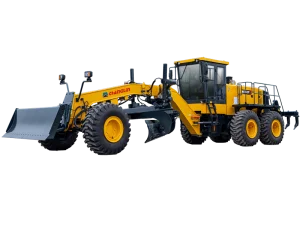
Complete Heavy Machinery & Skid Steer Portfolio
Explore our full production catalog of factory-direct heavy equipment engineered for international contractors, rental operators, and municipal projects.





6. Frequently Asked Questions (FAQ) & Strategic Sourcing Insights
What key certifications are required when importing wheel skid steers into Osaka?
Equipment deployed in Osaka and broader Japan must comply with local MLIT non-road emissions standards, sound power level requirements, and relevant JIS safety directives. Furthermore, machinery exported from Tier-1 Chinese factories like Sinomach-HI carries ISO9001 quality management certification, CE markings, and can be customized with engine options (such as Kubota or Yanmar Tier 4 Final/Stage V) to pass Japanese customs clearance seamlessly.
How do wheel skid steers compare against tracked compact loaders (CTL) for Osaka job sites?
Wheel skid steers offer higher travel speeds (up to 12–15 km/h), lower initial acquisition costs, and lower tire replacement expenses when operating on paved roads, asphalt, and concrete surfaces. Tracked loaders excel in soft mud or loose soil, but wheel skid steers remain the preferred choice for Osaka municipal roadworks, paved warehouse yards, and urban repair sites due to lower operating cost per hour on hard ground.
What is the standard lead time for shipping skid steers from Changzhou factories to Osaka Port?
Thanks to the proximity of East China manufacturing hubs to major marine terminals, standard ocean transit from Shanghai or Ningbo to Osaka Port typically takes only 3 to 5 days. Total order-to-delivery time depends on specification customization, but streamlined manufacturing processes enable dispatch within 15 to 30 days for standard fleet configurations.
Can custom attachment quick-couplers be factory-installed prior to shipment?
Yes. Factories offer universal hydraulic quick-attach systems compliant with SAE J2513 specifications, allowing operators in Osaka to seamlessly connect existing buckets, trenchers, sweepers, cold planers, and hydraulic hammers without modifying mounting brackets or hydraulic lines.
How are spare parts and technical support managed for international buyers?
Sinomach-HI supports global buyers through a comprehensive network of international parts depots, digital spare parts catalogs, and 24/7 remote technical assistance. High-wear replacement components (filters, seal kits, tires, hydraulic hoses) can be bundled directly inside container shipments alongside primary machine orders.
What hydraulic options should be specified for high-demand municipal attachments?
For continuous-duty attachments like cold planers or rock saws, buyers should specify the "High-Flow" hydraulic package (typically 30–40 GPM at 3,300 PSI) alongside an auxiliary hydraulic oil cooler. Standard flow options suffice for general bucket digging, grapple handling, and light auger operations.
Partner with a Global Construction Machinery OEM
Optimize your fleet capital efficiency with factory-direct wheel skid steers, motor graders, and excavators built to European and Japanese operational standards. Contact our international sales team for technical datasheets, customized FOB/CIF quotes, and plant audit schedules.